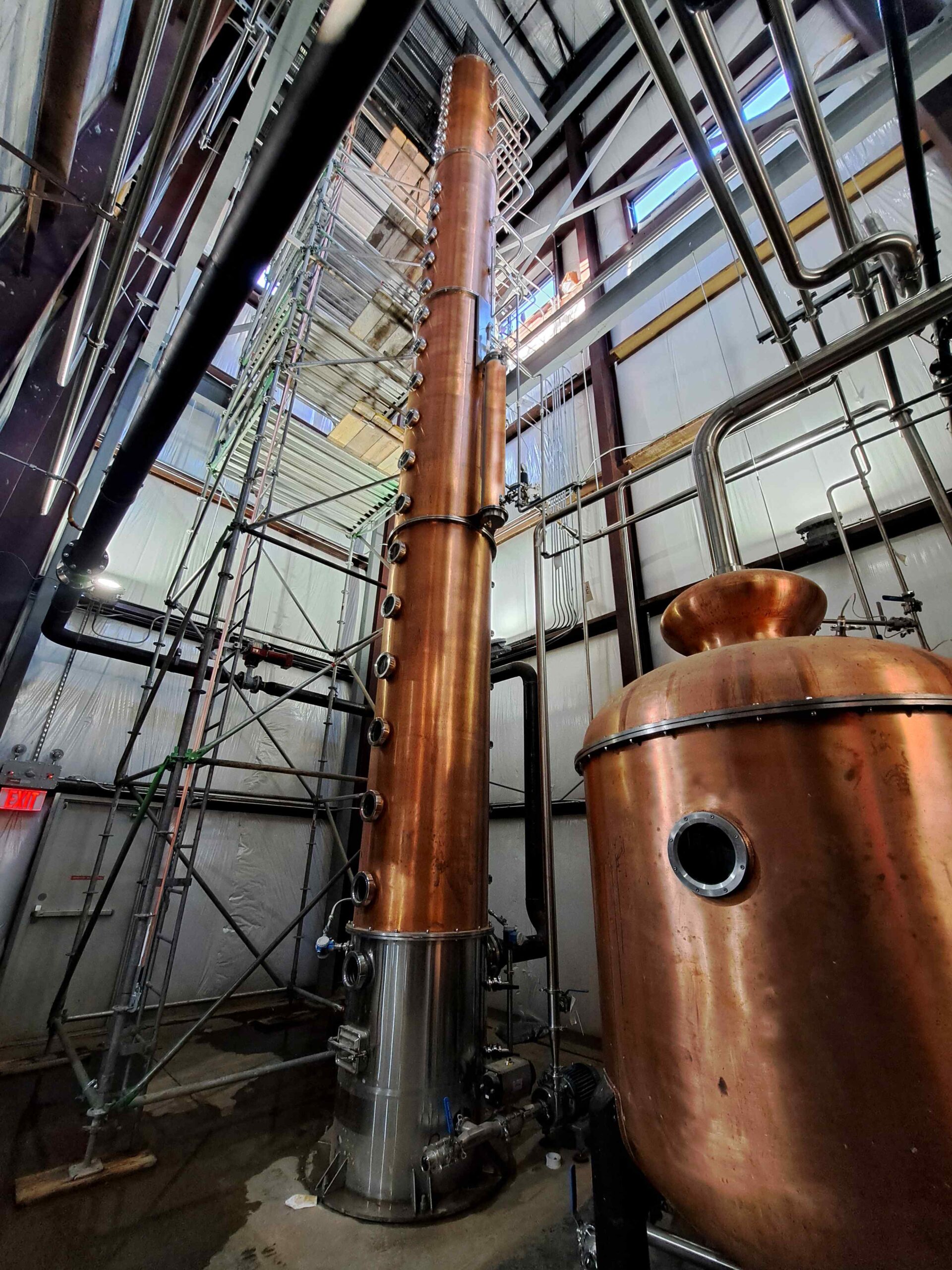
Sizing a continuous distillation column is one of the most critical decisions you will make when planning or expanding a distillery. An undersized column can limit throughput and future growth, while an oversized system can drive unnecessary capital and operating costs. The right design balances production targets, separation requirements, physical constraints, and regulatory considerations.
This article outlines the key factors used to size a distillation column, helping you define requirements before engaging in detailed design.
Why Proper Column Sizing Matters
A distillation column is not just a still – it is an integrated mass-transfer system. Proper sizing and design ensures:
- Consistent product quality
- Stable operation across varying feed rates
- Efficient energy use
- Compliance with pressure, safety, and code requirements
- Scalability for future expansion
When sizing is rushed or based on assumptions, operators often encounter bottlenecks, flooding, weeping, or excessive energy consumption.
Step 1: Define Your Production Objectives
The starting point for any column sizing exercise is a clear understanding of production goals.
Key questions include:
- Target production rate (per hour, day, or year)
- Expected operating schedule (hours per day, days per year)
- Planned expansion or phased capacity increases
- Continuous vs. batch operation (maybe a continuous distillation column isn’t needed)
Designing strictly for today’s needs can limit growth. Some facilities choose a column diameter that allows moderate future increases in throughput without needing to add a second system.
Step 2: Understand the Feed Characteristics
The nature of the feed stream has a major impact on column design.
Important considerations:
- Feed composition and variability
- Solids content or fouling potential
- Temperature and % ABV at entry
- Presence of congeners
Variable feeds with often require a system with a wide turndown ratio and robust internals to maintain performance across a range of operating conditions.
Step 3: Determine Separation Requirements
The required separation performance drives the height and internal configuration of the column.
This includes:
- Number of theoretical stages required
- Reflux ratio / purity
- Component properties
Higher separation demands generally mean taller columns and increased internal surface area.
Step 4: Column Diameter and Throughput Capacity
Column diameter is primarily dictated by vapor and liquid interaction.
If the diameter is too small:
- Flooding can occur
- Pressure drop increases
- Throughput is limited
If the diameter is too large:
- Liquid maldistribution becomes more likely
- Capital costs increase
- Turndown performance may suffer
Proper diameter selection balances:
- Maximum production rate
- Acceptable pressure drop
- Stable operation across expected turndown ranges
This is one of the most important decisions and should be validated by experienced process engineers.
Step 5: Pressure Rating and Mechanical Design
Column sizing is not purely a process calculation—it must align with mechanical and regulatory requirements.
Key mechanical considerations:
- Maximum allowable working pressure (MAWP)
- Operating vacuum or pressure range
- Design temperature limits
- Seismic and wind loading
- Applicable codes and standards
These factors affect wall thickness, flange sizing, nozzle reinforcement, and overall footprint.
Step 6: Utilities and Energy Integration
Production goals must align with available utilities.
Sizing decisions should account for:
- Reboiler duty and heating medium availability
- Condenser capacity and cooling method
- Energy recovery or integration opportunities
- Control stability during startups and shutdowns
A column sized without considering utilities can become constrained by infrastructure rather than process capability.
Work with an Experienced Equipment Partner
While preliminary sizing defines the direction, final column design should always be completed in collaboration with an experienced fabricator and process engineering team.
An integrated approach ensures:
- Process requirements translate into practical fabrication
- Internals, nozzles, and supports are correctly integrated
- The system meets performance, safety, and compliance expectations
Final Thoughts
Sizing a distillation column is about aligning production goals with reliable, efficient, and scalable equipment design. By clearly defining throughput, feed characteristics, separation requirements, and future plans, you create a strong foundation for a system that performs consistently over its entire lifecycle.
Whether you are planning a new installation or expanding an existing operation, thoughtful column sizing reduces risk, improves efficiency, and protects long-term capital investment.