Efficient wort cooling is one of the most critical stages in the brewing process. After boiling, wort must be rapidly cooled to yeast pitching temperature to prevent contamination, protect flavor stability, and allow fermentation to begin quickly. The heat exchanger is the piece of equipment responsible for this task, and breweries typically choose between plate heat exchangers and shell & tube heat exchangers.
Both technologies are widely used in the brewing industry, and each has advantages depending on brewery size, wort characteristics, maintenance preferences, and system design. Understanding how these systems differ can help brewers select the right solution for their production environment.
Why Wort Cooling Matters
When wort leaves the kettle, it is typically near boiling temperatures. It must be cooled quickly—often from 98–100 °C down to 18–20 °C for ales or 8–10 °C for lagers.
Rapid cooling helps achieve several critical goals:
- Reduces risk of microbial contamination
- Minimizes formation of unwanted flavor compounds
- Improves cold break formation and clarity
- Protects volatile hop aromas
- Allows fermentation to begin promptly
To achieve these results, the cooling system must provide high heat transfer efficiency while maintaining sanitary conditions.
Plate Heat Exchangers
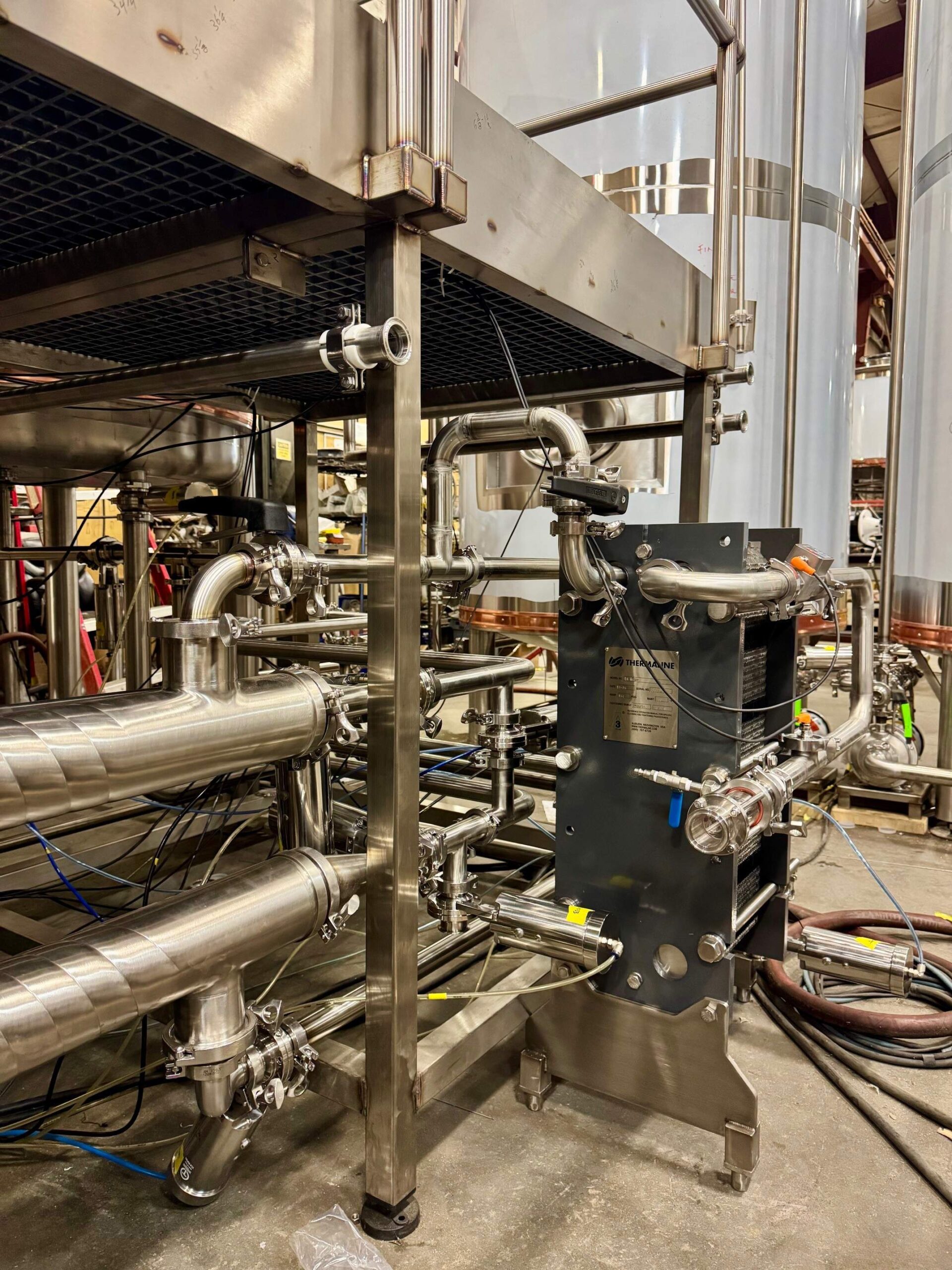
Plate heat exchangers are the most common wort cooling solution in modern breweries. They consist of multiple thin stainless steel plates stacked together with gaskets between them. Wort and cooling media (usually water and glycol) flow through alternating channels.
The thin plates create very high surface area, allowing heat to transfer quickly between fluids.
Advantages of Plate Heat Exchangers
Excellent heat transfer efficiency
The large surface area of thin plates allows extremely efficient heat exchange. This makes plate heat exchangers ideal for rapidly cooling wort in a compact footprint.
Compact equipment size
Because they are so efficient, plate heat exchangers can achieve large cooling loads while occupying relatively little space.
Two-stage cooling capability
Many breweries use plate heat exchangers with two stages:
- Stage 1: Cooling water removes most of the heat
- Stage 2: Glycol brings wort down to final fermentation temperature
This approach reduces glycol consumption and improves energy efficiency.
Energy recovery opportunities
Warm water leaving the first stage can often be recovered to the Hot Liquor Tank and reused as pre-heated brewing liquor for the next batch.
Limitations of Plate Heat Exchangers
Despite their advantages, plate heat exchangers have some challenges.
Susceptible to clogging
Trub, hop particles, and other solids can accumulate in narrow plate channels. Brewers often mitigate this with:
- Whirlpool separation
- Hop strainers
- Inline filters
Cleaning can be more complex
Although many units are CIP compatible, severe fouling may require periodic disassembly for manual cleaning.
Shell & Tube Heat Exchangers
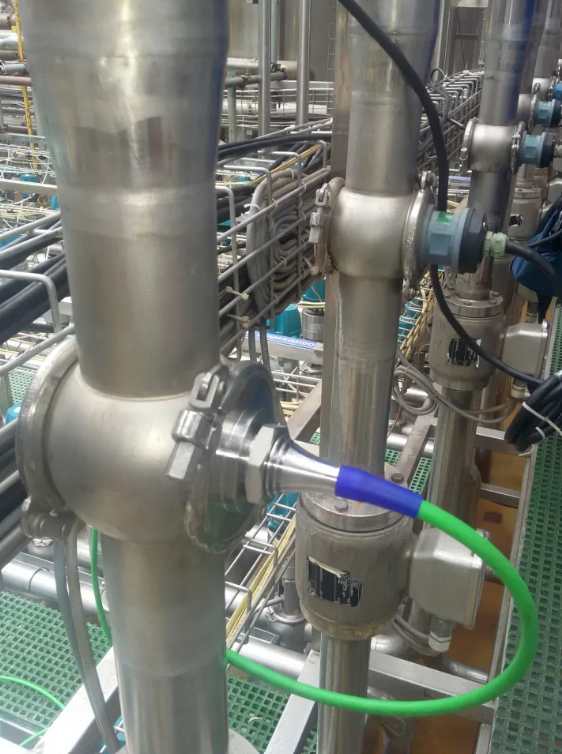
Shell & tube heat exchangers use a bundle of tubes inside a cylindrical shell. One fluid flows through the tubes while the other flows around them within the shell.
This design is widely used in industrial processing, chemical plants, and distilleries, and some breweries use it for wort cooling as well.
Advantages of Shell & Tube Heat Exchangers
Handles solids better
The larger internal passages make shell & tube exchangers less sensitive to solids in the wort stream. Breweries using large amounts of hops or less effective trub separation sometimes prefer this design.
Durable and robust
Shell & tube units are mechanically strong and tolerant of pressure fluctuations, making them popular in heavy industrial applications.
Simpler mechanical design
The internal tube bundle can be removed for cleaning or maintenance if needed.
Limitations of Shell & Tube Heat Exchangers
Lower heat transfer efficiency
Compared to plate exchangers, shell & tube designs typically require larger surface area to achieve the same cooling capacity.
Larger equipment footprint
Because of lower efficiency, shell & tube units are usually physically larger than plate heat exchangers handling the same load.
Less common in modern breweries
While they remain effective, most modern breweries favor plate heat exchangers because of their compact size and higher performance.
Key Differences at a Glance
| Feature | Plate Heat Exchanger | Shell & Tube |
|---|---|---|
| Heat Transfer Efficiency | Very high | Moderate |
| Equipment Size | Compact | Larger |
| Resistance to Solids | Lower | Higher |
| Energy Recovery | Excellent | Moderate |
| Cleaning | CIP capable but may require disassembly | Easier mechanical access |
| Typical Brewery Use | Most common solution | Less common but sometimes used |
Which Option Is Best for Wort Cooling?
For most breweries, plate heat exchangers are the preferred choice due to their high efficiency, compact size, and compatibility with two-stage cooling systems.
However, shell & tube exchangers may be advantageous in certain situations, such as:
- Breweries with extremely high hop loads
- Systems where solids removal is limited
- Industrial brewing or hybrid beverage facilities
- Applications requiring particularly rugged equipment
Ultimately, the best solution depends on the brewery’s process design, wort characteristics, and operational preferences.
Engineering the Right Cooling System
Selecting the right heat exchanger is only one part of designing an effective wort cooling system. Proper system integration also includes:
- Pump sizing and flow control
- Cooling water and glycol management
- Sanitary piping and CIP design
- Automation and temperature control
- Energy recovery strategies
When properly engineered, a wort cooling system can significantly improve brewery efficiency, product quality, and overall brewhouse performance.